

A training roadmap is a strategic plan that maps out the learning journey individuals or teams need to follow to build the skills and knowledge required for their roles, aligned to where the organisation needs to go.
For HR and L&D professionals, a training roadmap is the tool that turns development ambitions into structured, measurable action. Rather than approaching employee training ad hoc, a roadmap creates a shared direction: what skills need to be developed, in what order, using which resources, and toward which outcomes.
This guide covers what a training roadmap includes, the main types available, the benefits they deliver for employees and organisations, and a practical step-by-step for building one from scratch.
| Training Roadmap | Learning Path | Training Plan | |
|---|---|---|---|
| What it is | A strategic overview of learning goals and the journey to reach them, aligned to business objectives | A curated sequence of courses or resources for developing a specific skill or competency | An operational document outlining who needs what training, when, and at what cost |
| Focus | Strategic and organisational | Skill- or topic-specific | Scheduling and logistics |
| Time horizon | Long-term (months to years) | Medium-term (weeks to months) | Short-term (a quarter or financial year) |
| Audience | Organisation, team, or role level | Individual or cohort | Organisation or team level |
| Typically owned by | L&D or HR leadership | L&D team or learning platform | L&D coordinator or line manager |
| Best used for | Organisation-wide development strategy; role capability building | Upskilling in a defined area (e.g. leadership, data literacy) | Managing and scheduling training delivery |
What does a training roadmap include?
Training roadmaps typically consist of several essential components that work together to ensure a holistic learning experience. Let’s dive deeper into these components:
- Goals and Objectives: Clearly defined goals and objectives lay the foundation of a training roadmap. They outline what skills and competencies need to be developed and provide a roadmap’s direction.
- Competency Framework: A competency framework is a structured approach to describe the specific skills and behaviors required to perform a job successfully. It helps identify skill gaps and enables targeted training interventions.
- Learning Resources: From e-learning modules and webinars to workshops and coaching sessions, an effective training roadmap offers a variety of learning resources tailored to individual needs.
But there’s more to training roadmaps than just these components. Let’s explore some additional aspects that contribute to their effectiveness:
Assessment and Evaluation: Before embarking on a training journey, it’s crucial to assess the current skill levels of individuals or teams. This assessment helps identify existing strengths and weaknesses, allowing for personalized training plans. Regular evaluation throughout the learning process ensures that progress is being made and adjustments can be made if necessary.
Collaborative Learning Opportunities: Training roadmaps can be enhanced by incorporating collaborative learning opportunities. Group projects, team-based exercises, and peer-to-peer learning can foster a sense of camaraderie and encourage knowledge sharing. Collaborative learning also promotes problem-solving skills and the ability to work effectively in a team.
The Impact of Goal Alignment in Training Roadmaps
Aligning training goals with organizational objectives is crucial for achieving success. When learning initiatives are directly linked to overarching business goals, employees gain clarity on why certain skills are crucial and how they contribute to the bigger picture. Moreover, goal alignment enhances employee motivation, engagement, and commitment to their own development.
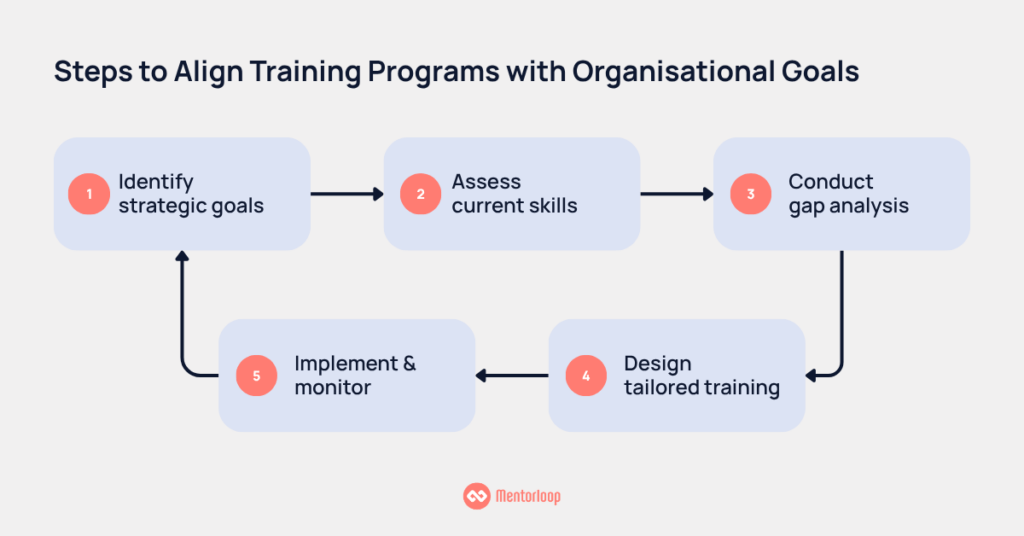
Crafting effective learning pathways
Creating a well-structured learning pathway is a key aspect of designing effective training roadmaps. A learning pathway provides a step-by-step progression of skills acquisition, guiding employees through their development journey. By breaking down complex skills into smaller, manageable learning modules, organizations can ensure a smooth and engaging learning experience.
Optimizing resource allocation for training success
While designing training roadmaps, it is essential to allocate resources wisely to maximize the impact of learning initiatives. Proper resource allocation ensures that employees have access to the right training tools, technologies, and support mechanisms required for successful skills development.
Sequencing training activities for maximum impact
Sequencing training activities strategically plays a vital role in achieving optimal learning outcomes. A well-structured training roadmap should prioritize foundational skills before diving into more advanced topics. This logical progression allows employees to build a strong knowledge base and gradually expand their expertise, setting them up for success.
Incentivizing learning with rewards
Have you ever found yourself more motivated to learn when there’s a reward waiting at the finish line? Incentivizing learning through rewards can be a powerful strategy to drive employee engagement and motivation. Whether it’s recognition, career advancement opportunities, or tangible rewards, a little extra motivation can go a long way in unlocking employees’ full learning potential.
Adapting training roadmaps to changing needs
Today’s business landscape is a rapidly evolving one so organizations must embrace agility and adaptability. Training roadmaps should not be static documents but rather living frameworks that can flex and evolve with changing needs. By regularly assessing and updating training roadmaps, organizations can ensure that learning initiatives are aligned with the latest industry trends and emerging skills.
What are the benefits of training roadmaps?
Here’s a quick list of the benefits of training roadmaps.
- Boosting employee performance through training
- Driving productivity gains
- Enhancing job satisfaction through training initiatives
- Fostering long-term organizational growth
- Maximising ROI on your L&D investment
- Building a culture of continuous learning
- Staying ahead of emerging skills and industry change
Boosting employee performance
Training roadmaps are powerful tools for enhancing employee performance. By providing employees with clear learning paths, organisations empower them to acquire new skills, improve their performance, and contribute more effectively to team and business outcomes.
Driving productivity gains
Productivity is the lifeblood of any successful organization. Training roadmaps play a crucial role in driving productivity gains by equipping employees with the right skills and knowledge to perform their tasks efficiently. By identifying skill gaps and addressing them through targeted training, organisations can improve how efficiently their workforce operates and create the conditions for sustainable growth.
Enhancing job satisfaction through training initiatives
Training initiatives that prioritize employees’ personal and professional growth can significantly impact job satisfaction. When organizations invest in their employees’ development through well-designed training roadmaps, it sends a powerful message that the organization values their growth and success. This commitment to learning creates a positive work environment and fosters a sense of loyalty and satisfaction among employees.
Fostering long-term organizational growth
A robust training roadmap sets the stage for long-term organizational growth. By consistently upskilling employees and strategically aligning training initiatives with business goals, organizations ensure a continuous influx of talent equipped with the skills needed to drive innovation and adaptation. This ongoing investment in the workforce creates a strong foundation for sustained success and future growth.
Maximising ROI on your L&D investment
Training initiatives without a roadmap can be like embarking on a journey without a destination in mind. Training roadmaps provide structure and focus, ensuring that every step taken leads to meaningful learning outcomes. By outlining clear objectives, sequenced activities, and available resources, training roadmaps maximize the return on investment organizations make in their learning and development programs.
Building a culture of continuous learning
Training roadmaps also foster a culture of continuous learning within organizations. When employees have a clear roadmap for their professional development, they are more likely to actively seek out opportunities for growth and improvement. This self-driven approach to learning not only benefits the individual employees but also contributes to the overall knowledge and expertise within the organization.
Staying ahead of emerging skills and industry change
Additionally, training roadmaps can also help organizations identify emerging trends and technologies in their industry. By staying ahead of the curve and incorporating relevant training programs into their roadmaps, organizations can ensure that their workforce remains up-to-date with the latest advancements. This proactive approach to training not only enhances employee performance but also positions the organization as a leader in the industry.
What are the types of training roadmaps?
Training roadmaps aren’t one-size-fits-all. The right type depends on your organisation’s structure, the skills being developed, and how much flexibility your learners need.
Linear training roadmaps
The most straightforward type. Learners move through a defined sequence of modules or activities in order, with each step building on the last. Linear roadmaps work well for onboarding, compliance training, or any scenario where a consistent baseline needs to be established across a team or cohort. The trade-off is limited flexibility. They don’t adapt easily to learners at different starting points.
Role-based training roadmaps
Designed around the specific skills and knowledge required for a particular job function. Rather than a uniform curriculum, role-based roadmaps are tailored to what a sales manager, software engineer, or HR coordinator actually needs to know and be able to do. They’re particularly effective in organisations with diverse functions, where generic programs deliver limited practical value.
Competency-based training roadmaps
Built around a competency framework, a structured description of the skills, behaviours, and knowledge required to perform effectively in a role. Learners progress by demonstrating competency, not just by completing modules. This type is common in regulated industries and professional development contexts where a clear, verifiable standard of capability needs to be met.
Self-directed training roadmaps
Rather than a fixed path, self-directed roadmaps give employees a set of goals and the autonomy to determine how they develop toward them. The organisation defines the destination; the learner chooses the route. This approach suits experienced employees and organisations with strong learning cultures, but requires clear goal-setting and a degree of intrinsic motivation to be effective.
How to build a training roadmap
Building an effective training roadmap doesn’t have to mean starting from scratch — but it does require a clear process. Here are the core steps.
1. Define your goals and align with organisational priorities
Start by identifying what the roadmap is designed to achieve. Are you closing a specific skills gap? Supporting a product launch? Building leadership capability in your mid-level managers? The clearer the goal, the more purposeful every subsequent decision will be. Roadmaps not anchored to a specific business outcome tend to drift.
2. Identify your audience and assess their starting point
Who is this roadmap for, and what do they already know? A skills gap analysis or even a simple self-assessment gives you a baseline — and prevents over-training experienced employees while under-preparing newer ones.
3. Map the learning journey
With goals and audience defined, outline the sequence of skills or knowledge areas to be developed, and the order in which they should be tackled. Foundational skills come first; advanced or role-specific content follows. This is also where you decide which roadmap type best fits your context.
4. Select your learning resources
Match each stage of the roadmap to the learning format best suited to it — formal training modules, on-the-job practice, coaching, mentoring, workshops, or a combination. The resource mix should reflect both how your team learns best and what’s practically available.
5. Set milestones and timelines
A roadmap without timelines is a wishlist. Build in checkpoints where progress can be assessed — both to keep learners on track and to give you the data needed to evaluate whether the roadmap is working.
6. Review and update regularly
Business priorities change, new tools emerge, and skills that were once niche become essential. Build in a regular review cycle — typically annual, or triggered by significant organisational change — to keep the roadmap aligned with what the business actually needs.
Frequently Asked Questions
What's the difference between a training roadmap and a training plan?
A training plan is typically a shorter-term, operational document that outlines who needs what training, when, and at what cost. A training roadmap is broader and more strategic: it maps a learning journey over time, aligned to business objectives and long-term capability goals. Think of the plan as the schedule and the roadmap as the strategy behind it.
Who is responsible for creating a training roadmap?
In most organisations, training roadmaps are owned by the L&D or HR function, developed in collaboration with functional managers who understand the skill requirements of specific roles. For organisation-wide roadmaps, senior leadership input is usually needed to ensure alignment with business priorities.
How long does it take to build a training roadmap?
It depends on scope. A roadmap for a single role or team can be drafted in a few weeks, once skill gaps and learning resources are identified. Organisation-wide roadmaps typically take longer, particularly where a competency framework doesn’t already exist, and are often built in stages rather than all at once.
How do you measure the success of a training roadmap?
Common measures include training completion rates, skills assessment results before and after the program, performance review outcomes, and business KPIs tied to the skills being developed such as reduced error rates, improved customer satisfaction, or faster onboarding. The key is defining success metrics at the design stage, not retrospectively.
How often should a training roadmap be updated?
Most L&D teams review training roadmaps at least annually, with additional updates triggered by significant business changes like new technology, restructuring, or shifts in strategic direction. A roadmap that hasn’t been reviewed in two or more years is likely misaligned with what the organisation currently needs.
We hope you now have a deeper understanding of their definition, the various types available, and the immense benefits they offer. Whether you’re an individual looking to enhance your skills or an organization seeking to optimize learning initiatives, training roadmaps can be your compass towards continuous growth and success.
Ready to elevate your organization’s training and mentoring programs? Discover how Mentorloop can streamline your journey to success. Our platform is designed to assist HR and L&D Leaders, Functional Leaders, Community Managers, and Professionals in various fields, including Charities and Nonprofits through our Community Support Program. Experience the power of effective mentoring with Mentorloop and see firsthand how it can enhance your training roadmap. Book a Demo today and take the first step towards running your best mentoring program yet.