

Improving a mentoring program doesn’t always mean starting from scratch. Whether your program is losing momentum, struggling with engagement, or just not delivering the outcomes you hoped for, there are clear, practical steps you can take to turn things around. This guide walks you through how to improve a mentoring program, from revisiting your goals and tightening your matching process to better supporting your participants and tracking what’s actually working.
How do you know if your mentoring program needs improvement?
Before diving into the steps, it helps to know what to look for. Here are the most common signs that a mentoring program needs attention:
- Low engagement: Mentors and mentees aren’t meeting regularly, response rates are dropping, or participation is trailing off mid-program
- Match dissatisfaction: Participants feel their match isn’t the right fit, or a high number of matches aren’t progressing
- Unclear goals: Participants can’t articulate what they’re working towards, or the program’s objectives don’t connect to broader organisational priorities
- Heavy admin burden: The coordinator is spending most of their time on logistics rather than program quality
- No way to measure outcomes: You’re running the program but can’t demonstrate its impact to stakeholders
- Participant drop-off: People are signing up but not staying engaged through to the end of the program
If any of these sound familiar, the steps below will help you identify what to fix and where to start.
Step 1: Clarify Your Program Goals
Begin by revisiting the goals and objectives of your mentoring program. These goals could range from employee or membership retention to community building or DEI (Diversity Equity and Inclusion).
Are they clearly defined? If not, make sure to take the time to redefine them and make sure that this time, they are crystal clear.
It’s important to take the time to consider what you hope to achieve through your mentoring program. It’s what will help you determine whether your program is effective and point you in the direction of the best path for improving it.
When defining your goals, consider the needs of your organization and the program participants. Consider the skills and knowledge that are most important for success in your industry, as well as the personal and professional goals of your people.
Once you have a clear understanding of the program’s purpose, it’s important to communicate this to all stakeholders. This includes mentors, mentees, and organizational leaders. Make sure that everyone understands the goals of the program and how it can benefit them.
When you have buy-in from your organisation’s leaders, it’s easier to get the support you need to improve a mentoring program. Likewise, when mentors and mentees understand the purpose and goals of the program, they can better align their efforts and focus on the desired outcomes.
Having clear goals will not only motivate your participants but also provide a framework for evaluating and refining the program in the future.
Pro Tip: Make sure to also create opportunities for mentors and mentees to provide feedback and share their experiences. By working together, you can make sure that your mentoring program is on track and aligned with the goals you set and meeting the needs of everyone involved.
![[Webinar Kit] Building the Blueprint: Designing Your Best Mentoring Program Yet Learn how to design and build a mentoring program that serves your organization’s goals, engages participants, and delivers measurable outcomes.](https://no-cache.hubspot.com/cta/default/4058869/interactive-190169165857.png)
Step 2: Evaluate Your Current Mentoring Program
Before implementing any improvements to your mentoring program, it is essential to evaluate the existing structure and effectiveness of your mentoring program. A thorough evaluation can help identify areas of success and opportunities for growth.
Evaluate the program’s overall performance as well as individual experiences. Here are a few areas we suggest taking a closer look at.
Engagement
Are participants meeting and communicating regularly? Does the program do enough to encourage regular communication? If engagement levels are low, it may be necessary to provide additional support or consider holding a few activities to re-engage your participants.
For five easy ways to improve mentoring program engagement, watch this video:
Diversity and Inclusion
Do you have enough participants from different demographics, experiences, and backgrounds? It’s essential to ensure that your mentors and mentees come from diverse backgrounds and have different lived experiences. This ensures that everyone gets a well-rounded experience. If you find your program lacking in this department, it might be time to explore more targeted recruitment efforts for members of underrepresented groups.
Resource
Do your participants find the amount of resources provided to be enough? Or is there too much that they find it overwhelming? What do they think of the quality of the resources? It’s important to ensure that mentors and mentees are confident that they have the tools and resources they need to buil and sustain successful mentoring relationships.
Program structure and duration
Does the program go for long enough to allow for meaningful relationships to develop and make progress on goals? Or is it too long that the tail end of the program becomes a drag for participants? Should you run the program in cohorts or open it up for always-on enrolment?
Are there clear guidelines and expectations for mentors and mentees? Is everyone on the same timeline and is that setup currently working for everyone? Is the signup process easily accessible?
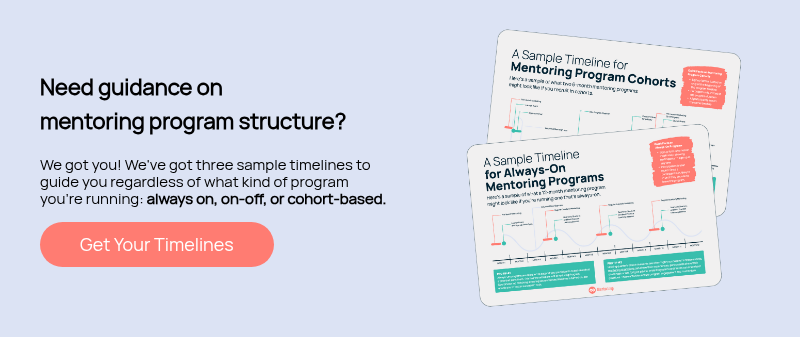
You can read all about mentoring recruitment styles on the blog:
Ask your participants for feedback (If you’re running your program on Mentorloop, the platform does this for you) to help you identify which areas could use an uplift. Is it matching? Do mentors want more training? Do mentees need more resources? When doing this, we recommend you ensure that feedback can remain anonymous and that your participants know this. Collecting feedback this way encourages your participants to give their honest opinion.
You can also use participant feedback to find what things are currently working for your program and determine if these can be expanded or adopted all across the program.
Step 3: Review Your Matching Process
Technically, this is part of step 2, but as the success of the mentoring programs often depends on the matches between mentors and mentees, this deserves its own step.
Start by asking your participants for their thoughts on the matching process. Solicit input on their preferences, goals, and expectations. How did they find the overall experience? Did they feel like it was easy or difficult to get a good match? What went well and what do they think needs improvement? Using participant feedback, review your matching criteria and matching style. This will help you refine your matching to be more targeted and therefore more effective.
Matching criteria
Ensure that the matching criteria your program uses align with the program’s goals and participants’ needs. Remember that different program goals need to use different criteria. For example, a program that is primarily focused on DEI (Diversity Equity and Inclusion) would need to put more weight on participants’ background (country of origin, gender, disability, etc.) while a program that aims to increase cross-team collaboration in a company will need to prioritise pairing participants from different teams, departments, or even business units across the organisation.

Pro Tip: Is capacity for mentoring an issue for matching in your program with mentors taking on more than one mentee? Make sure you’re reminding your participants that they can easily mark themselves as ‘Unavailable’ for matching on Mentorloop if they currently have no capacity to commit to an additional mentoring relationship. This helps you immediately reduce the number of match failures due to a lack of time, capacity, and responses to mentoring partners.
Matching style
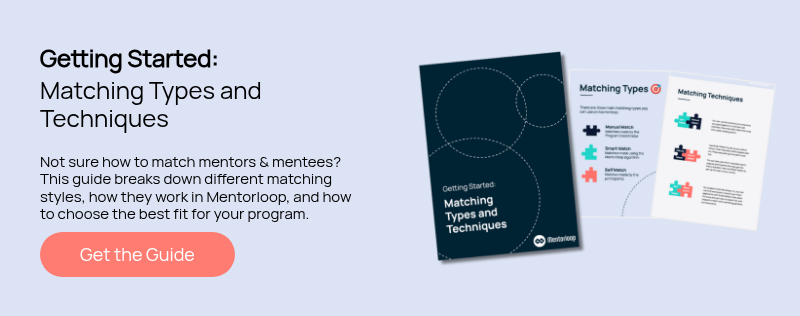
If you’re manually matching all of your participants, evaluate if this is still feasible for you as program coordinator. If you’re scaling the program, it might be time to rethink this. Maybe it’s time to empower your participants to make their own mentoring matches or even consider using a matching algorithm.
Are you allowing your participant to organise themselves into their own mentoring matches? Has this worked? If the amount of matches made through this matching style hasn’t quite reached the number you expected, it might be time to consider taking this responsibility off your participants’ hands.
It’s also worth looking at your historical match data. And don’t just look the matches that worked, check the ones that didn’t. If you notice patterns in unsuccessful matches like same department pairings that didn’t progress, significant seniority gaps that created uncomfortable dynamics, or goals that were too misaligned to find common ground, those patterns are telling you something your matching criteria isn’t currently accounting for. Adjusting your criteria based on what hasn’t worked is often more instructive than optimising for what has.
Pro Tip: No mentoring program will get matches 100% right. Make sure that you’re also reviewing the process for troubleshooting matches. Are there ways you can identify issues earlier? Do participants know what to do if they’re having issues with their mentoring match?
Step 4: Review the Resources and Support You Provide
Well-supported mentors and mentees mean you’ve got a cohort that’s well-equipped for success. So take a look at how you’re supporting your cohort as well as the resources and assets you’re using to do that.
First of all, make sure your participants know where to find resources and how to reach out for support.
Review the resources you provide your mentors and mentees. Remember that even experienced professionals benefit from mentorship training. Effective mentoring goes beyond subject matter expertise and requires skills such as active listening, empathy, and communication. Make sure you’re providing resources that equip mentors with tools and strategies to foster successful relationships with their mentees. As for mentees, ensure they have the tools to empower them to take control of their own mentoring journey and take accountability for progressing towards their goals.
If you don’t have one already, it’s extremely helpful to establish a resource library with articles, books, and online materials for mentors to access throughout their mentoring journey. This can include resources on effective communication, active listening, and other key skills for successful mentorship.
Pro Tip: On Mentorloop, you’ll have lots of assistance in empowering and encouraging participants to work towards their goals. Mentorloop gives your participants the ability to set goals and tasks, as well as free and immediate access to an extensive library of mentoring resources that you can manage. With Mentorloop, you’ll get the advantage of timely and contextual guidance for your participants without having to invest the time that it usually takes to do so without mentoring software.
Remember to consider the preferences of your cohort as well. Are they interested in attending a short training webinar at the start of the program? Would they like to attend regular workshops on topics such as building trust, understanding generational differences, cultural empathy, or providing constructive feedback? These training sessions can help your participants develop these important skills and become more effective mentoring partners overall.
Another thing to consider is creating separate, dedicated communities for mentors and mentees. You can do this through online forums or in-person events. This gives participants the opportunity to find support among fellow mentors/mentees through sharing experiences, advice, and resources that they’ve found to be useful.
Step 5: Review Your Program Guidelines and Expectations
Take a look at the guidelines you’ve established for your existing program. Are they clear? Were they followed? Did they benefit the program? If the answer to any of these is ’no,’ they need to be reviewed and revised. You also need to assess if these guidelines and expectations are communicated well and at the right time.
Clear guidelines and expectations are the foundation of any successful mentoring relationship and are therefore essential for any mentoring program. They facilitate effective communication and reduce the likelihood of misunderstandings, allowing mentors and mentees to make the most of their time together.
Ensure you’re clearly communicating the roles and responsibilities of both mentors and mentees and that this is done during the initial stages of the relationship, or even as soon as participants sign up. It’s also important to cover areas such as communication methods, meeting frequency, the scope of the mentoring relationship, and goal-setting protocols. Establish these guidelines early on as well so both parties in mentoring relationships can avoid confusion and stay on the same page.
It’s also important to remember that expectations can change over time and that setting expectations doesn’t have to be a one-time event. As the mentoring program progresses, mentors and mentees may discover new areas of interest, encounter unexpected challenges, or need to adjust their goals. To ensure that mentoring relationships stay on track, it’s important to periodically check in with your cohort to assess their progress, offer feedback, and remind them of their commitments.
Pro Tip: Mentorloop allows you to do these check-ins in bulk, saving you time and effort while still ensuring you’re keeping on top of your program’s health and your participants’ progress.
Step 6: Foster a Supportive Environment
A supportive environment is crucial for a successful mentoring program. When mentors and mentees feel supported, they are more likely to stay engaged and committed to the program. So take time to evaluate whether this is the case for your program. Do participants have avenues to ask for support? Do they have opportunities to learn from others in the program? Are their successes celebrated?
These are all things that foster a sense of community among mentors and mentees as they realize they are not alone in their experiences and their journeys.
Encourage open communication and transparency between mentors and mentees by providing resources to help facilitate difficult conversations, celebrate successes, and address challenging situations. Develop activities and events that strengthen the mentor-mentee relationships and create a sense of belonging within the program. You should also consider creating opportunities for participants to connect with and learn from their peers. This can include peer coaching, group workshops, or networking events. These connections can greatly contribute to their personal and professional growth and enhance their experiences within the mentoring program.
Offering recognition for the achievements and contributions of your mentors and mentees is another way to foster a supportive environment. Celebrating their accomplishments can reinforce their commitment to the program and inspire others to strive for excellence. Recognition can take many forms, such as awards, certificates, or public acknowledgements.
It is important to remember that fostering a supportive environment is an ongoing process. It requires consistent effort and attention to ensure that all participants feel valued and supported.
Pro Tip: Mentorloop surfaces key moments in your mentoring program so you always know when there’s something to celebrate. Checking your Highlights and your Dashboard for these magic mentoring moments and milestones is a great way to find an celebrate those little wins.
Step 7: Track Your Program's Progress
One of the most important things to remember when looking to improve a mentoring program is that you don’t have to wait until it concludes to do it. So regularly monitor the progress of your program. It pays to be right on the pulse of your program so you can identify potential challenges and gauge the effectiveness of certain activities in a timely manner. This allows you to be agile in responding to any issues that may arise and reinforcing things that work.
Implement regular check-ins, updates, and evaluations to provide insights into areas for improvement. Don’t be afraid to adapt the program as you see fit to ensure continued success and maintain engagement from participants. Additionally, remember that tracking progress is not just about identifying areas for improvement, it’s also about celebrating successes. Be sure to recognize and celebrate the achievements of mentors and mentees along the way, as well as any milestones or collective success for your mentoring program or cohort. This can help to build momentum and keep participants engaged and motivated.
How Mentoring Software Accelerates Program Improvement
Investing in mentoring software is the fastest and most efficient way to streamline your program’s administration and improve the overall experience for mentors and mentees. With Mentorloop helping you through every part of managing a mentoring program, from getting started to scaling, you can focus on ensuring your program’s success instead of spending most of your effort on time-consuming tasks.
Reduced admin
If you are running your mentoring program without mentoring software, then it is probably inefficient and full of admin tasks including creating internal documents to inform people of the program; matching your mentors and mentees via spreadsheets; communicating all of this via email; then attempting to report on the program and individual outcomes. This is a heavy burden on the person running the program.
When you run your program with Mentorloop, not only are these tasks made simple, they’re also made more effective and more efficient. You can send out one form to garner interest and create mentor/mentee profiles; easily match people based on profile elements such as skills, goals, etc.; communicate with all participants via the platform – and then sit back and relax as analytics and reports funnel through your monitor. All of this happens online in one spot. No spreadsheets – and no emails.

Match with ease
With Mentorloop’s matching options, all supported by Mentorloop’s unique equitable matching algorithm, you can make mentoring magic happen with ease. No more guessing, no more spreadsheets, and no more sticky notes.
Scalability
Running a mentoring program manually makes it near-impossible to effectively offer mentoring to 500 people or more. With Mentorloop, you can literally create life-changing mentoring connections for as many people as you want with little to no increase in admin burden. This means more mentoring for more people and more benefits for your organisation.
For advice on making sure your mentoring program is scalable from the start, watch this video:
Resources & Support
Mentorloop doesn’t just help with admin and matching. It also serves as a portal for providing mentors and mentees with resources and content which supplement and enhance their mentoring experience. With resources such as goal-setting frameworks and spreadsheets, meeting checklists, and advice about how to be a great mentee or mentor, Mentorloop guides your participants throughout their mentoring journey so you can be confident they’re getting the support they need without one-to-one hand-holding from you. What’s more, with Mentorloop, you also have the freedom to send your own handcrafted or curated resources and serve them to your participants through the platform should you require specialised resources for your program’s unique needs.
Tracking, analytics, and reporting
Measuring mentoring success is a pain point and frequently voiced frustration of mentoring program coordinators everywhere. Mentorloop not only makes this job easy, it also makes it actionable. Mentorloop keeps track of all the relevant program metrics, while also serving as a tool for garnering quantitative and qualitative program feedback. All of this gets served to you, the program coordinator, in beautiful charts that are easy to interpret, take action on, and share. So not only are you able to preempt any negative experiences, make changes, as well as expand or adjust the program based on data, but you’re also able to more effectively communicate your program’s progress and success to key stakeholders.
Consistency
And finally, one of the major and often unforeseen ways that mentoring software improves a mentoring program is by making inputs – and therefore outcomes – more consistent. It allows the coordinator to create smarter matches every time, ensure that every mentorship is supported by resources and content, and makes it possible and easy to manage an ongoing mentoring program without the hassle of coordination.
And the end result of all these enhancements is better outcomes for you, your people, and your organisation. They mean less painful admin work for the coordinator and a more engaging and fruitful experience for the participants.
There are many ways to improve a mentoring program, but what is most important is putting the infrastructure in place to support and supplement the human interaction of a great mentoring relationship. And Mentorloop is the fastest, most efficient, and cost-effective way to do that.
Key Takeaways
- Start with your goals. A mentoring program that isn’t working often hasn’t clearly defined what “working” looks like. Revisiting your objectives is the foundation for everything else.
- Evaluate before you change. Understand what’s actually causing issues — whether it’s matching, engagement, resources, or structure — before making adjustments.
- Matching is its own discipline. The right match criteria depend on your program’s goals. What works for a DEI program won’t work for a cross-team collaboration program.
- Support both sides of the relationship. Mentors need training and tools just as much as mentees do. Don’t assume experience equals readiness.
- Clear expectations prevent most problems. Misaligned expectations between mentors and mentees are one of the most common sources of program friction and one of the easiest to address.
- Don’t wait until the end to improve. Continuous monitoring means you can course-correct mid-program rather than carrying the same issues into the next cohort.
- Software doesn’t replace good program design, it amplifies it. The right tools make a well-designed program significantly easier to run and scale.
Frequently Asked Questions
How do I know if my mentoring program needs improvement?
Common signs include low engagement between mentors and mentees, poor match satisfaction, inconsistent participation, and difficulty demonstrating outcomes to stakeholders. If participants aren’t meeting regularly, aren’t clear on their goals, or you’re spending most of your time on admin rather than program quality, those are good indicators it’s time for a review.
How often should you review a mentoring program?
Ideally, you should monitor your program continuously rather than waiting until it ends. Regular check-ins, mid-program feedback surveys, and real-time tracking give you the opportunity to address issues early and reinforce what’s working.
Can you improve a mentoring program while it's still running?
Yes, and you should! You don’t need to wait until a program ends or a cohort finishes to make improvements. Identifying issues mid-program through regular check-ins and participant feedback means you can course-correct in real time rather than inheriting the same problems in the next cohort.