
The most important part of any relationship is communication, which is why it’s especially important for both mentors and mentees to take note of their own communication styles and ensure that they work for their mentoring partner. Active listening in mentoring is the practice of fully concentrating on what someone is saying, not just their words, but the meaning, emotion, and intent behind them, so you can respond in a way that genuinely helps. It’s an important life skill that applies in workplaces, families, and everyday relationships, but in mentoring, it’s foundational.
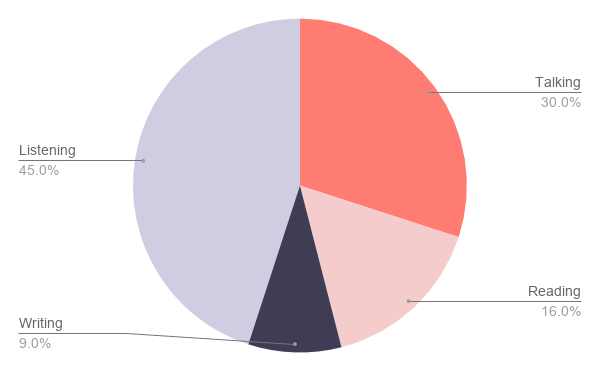
According to the Chartered Institute of Personnel and Development (CIPD) there are four principal methods that we use to communicate (with the exception of non-verbal behaviour). It’s curious to note that unlike talking, reading and writing, we are not taught how to listen. CIPD notes that although we spend a lot of time ‘hearing’, experts estimate that only 25-50% of this time is spent actually ‘listening’.
So how do we learn how to listen, and more specifically, become active listeners?
When it comes to mentors specifically, an active listening approach is key; after all, mentors and mentees spend much of their relationship talking and listening to one another. Active listening is a technique in which the listener must fully concentrate in order to understand, respond and remember what is being said. Like any skill, it must be developed. Here are some ways you might notice that your own mentor is an active listener (and how you yourself can become one!).

What is Active Listening?
At the core of it, active listening is a communication technique that involves more than just hearing the words the speaker is saying. It involves focusing on what the speaker is saying, as well as their intonation, body language, and facial expressions. Active listening involves paying attention to what is behind the words the speaker is saying – their feelings, emotions, and concerns. Rather than just responding to the words, active listeners make sure that they truly understand what the speaker is communicating.
It’s an important life skill to have in any relationship, whether it is with a friend, family member, or colleague. It can assist in creating a safe space for the speaker to express themselves, and it allows the listener to gain a better understanding of the speaker’s thoughts and feelings. It does wonders in building trust and respect between people as demonstrates the listener is truly engaged in the conversation and is taking the time to understand the speaker’s perspective.
Luckily, this is a skill that can be developed with practice. It involves being more mindful of others’ words and body language, responding in a way that shows you’re truly listening and understanding – and it involves asking questions to gain further insight into thoughts and feelings. With practice, active listening can become an invaluable tool for creating meaningful conversations and relationships and ultimately, makes you a more empathetic person.
So let’s dive in and become better active listeners.
Active listening is Quality 7 in our 10-part series on the10 Key Qualities and Habits of a Highly Effective Mentors, and arguably the one that underpins all the others.
Examples of Active Listening in Mentoring
Understanding active listening is one thing. Seeing it in practice is another. Here are three ways it might show up in a real mentoring conversation.
The open-ended redirect
A mentee is venting about a conflict with their manager. Rather than jumping in with advice, the mentor says: “It sounds like this has been really frustrating. What do you think is driving the tension?” The mentor isn’t solving the problem here. Instead, they’re creating space for the mentee to think it through themselves.
The mirror
Halfway through a conversation, a mentor pauses and says: “If I’m understanding you correctly, you’re not unhappy with the role itself; it’s more that you’re not sure where it’s going. Is that right?” This kind of reflective summary shows the mentee they’ve been heard, and often helps them hear themselves more clearly too.
Reading beyond the words
A mentee says they’re fine with a new project, but their energy drops whenever they talk about it. An active listening mentor notices this and gently names it: “You mentioned you’re okay with it, but I notice you seem less energised when it comes up. What’s that about?” This is active listening going beyond words to what the speaker is actually communicating.
How Effective Mentors Use Active Listening
1. They stop talking
This may seem like common sense, but it can be harder than you might think! When some people stop talking, it’s only because they’re thinking about what they want to say next. But not with active listeners! Active listeners suppress the urge to focus on how they want to respond and first actually listen to what you have to say.
2. They approach listening as a learning experience
As we said in Part 7 of our series, the most effective mentors are life-long learners. This goes hand-in-hand with them also being active listeners, as a trademark of active listening is to approach the listening experience as a learning one. Oftentimes, these listeners think of the speaker as someone who can teach them something—no matter who that speaker may be! For them, there’s always something to learn.
3. They guide the conversation
Active listeners are rarely happy with a “yes” or “no” answer. Instead, they avoid close-ended questions and employ open-ended ones, using broad queries to guide their mentees to discover solutions for themselves. Some examples of leading questions may be “What other alternatives have you considered to X?” or “How do you envision your career-changing once you do Y?”
In the book Never Split the Difference: Negotiating as If Your Life Depended on It, Chris Voss speaks to his version of this concept he’s dubbed as ‘tactical empathy’, where in conversation you show you’re listening by repeating back to them. In this approach, you’re not driving for a yes. You’re aiming for a that’s right. When you understand someone so fully, and that individual knows that you understand them, and you have the ability summarize their thoughts completely, they have no choice but to respond with that’s right and this builds camaraderie and trust.
The aim is to learn about your counterpart by asking open questions and showing you’re truly hearing them.
4. They make you think
While active listener-mentors use guiding questions to get their mentees where they need to be, they don’t let them off the hook with lofty responses. Instead, they ensure they pull out actionable items from every conversation. These may be discovered after asking questions like “Tell me how you plan to accomplish X,” or “How did you decide that Y was the best choice?” These direct, specific questions can help focus the conversation while bringing to light important insights and next steps.
5. They take into account more than just what you say
These mentors aren’t just paying attention to the words you’re saying, but how you’re saying it and what your body is doing while you speak. That’s because oftentimes, the real message we want to convey doesn’t take the form of a verbal response, it may be less cerebral and more emotional, expressing itself through our body language. Active listener-mentors know to look for this in order to truly understand what you want to get across.
6. They pay attention, summarise, and provide positive feedback
Ultimately, these mentors will pay attention and respect what you have to say, even if they don’t agree. In order to ensure they understand correctly, they’ll also often summarize what you’ve said by using statements such as “If I’m understanding you correctly, you…” or “Tell me if this is what you’re saying…” Last but not least, they’ll use positive feedback and body language—such as a nod, smile or positive “uh huh”—to encourage you and signify interest and understanding.
It’s important to note that active listening takes energy. People who listen actively don’t simply sit back and allow words to hit their eardrums. They sit up straight, take notes, ask questions, and repeat or “mirror back” what they’ve heard in order to ensure they’ve understood it properly. If you notice this type of behaviour from your own mentor during conversations, you’ve hit the jackpot! Your mentor is fully invested in you, what you’re saying, and helping you grow. The world would surely be a better place if we were all active listeners.
Why Active Listening is Important
Active listening has been shown to be helpful in many communication situations and helps to build relationships by showing the speaker that they are being heard and understood. This can help to create an atmosphere of trust and transparency. On the other hand, not listening or defaulting to offering unsolicited advice can actively lead to misunderstandings and feelings of frustration and resentment. It’s also a tool to help resolve conflicts and understand complex situations by really absorbing what is being said and attempting to comprehend it.
It encourages a space where all parties involved in a conversation are on the same page. By listening carefully and asking questions, it’s easier to gain a better understanding of the other person’s point of view and help to avoid misunderstandings and ensure that everyone is working towards the same goal.
Active Listening Techniques You Can Start Using
We’ve listed a number of ways your active listening skills can be learnt and honed over time with practice. Some further key components of active listening include:
- Watch body language: Keeping an eye on body language cues can help you understand more about what the speaker is feeling.
- Maintain eye contact with the speaker and really concentrate on their words.
- Encourage the speaker to continue talking by providing verbal responses such as “yes” or “go on”, as well as non-verbal cues such as nodding.
- Be aware of your personal biases or preconceived notions that may be influencing your listening.
- Remain open-minded and try to view the conversation from the speaker’s perspective.
- Be patient and allow the speaker to take their time to express their thoughts and feelings.
- Be mindful of your attitude: Your attitude towards the speaker will inevitably affect how much you are able to take in.
- Resist the urge to dish out advice or judgement during the conversation, and instead focus on truly understanding the speaker’s words and feelings.
- Practice active pauses: Taking pauses before responding can help you correctly process the information presented to you.
- Slow down your speech: Speaking quickly may prevent you from understanding the speaker and their context.
- Avoid multitasking: Multitasking during a conversation can be detrimental to the listener’s understanding, so try not to do it.
By actively listening and engaging with the speaker, you can create a safe and supportive environment for meaningful dialogue.
Key Takeaways
- Active listening in mentoring means giving your full attention to what someone says and what they mean: their words, emotions, and intent.
- Hearing and listening aren’t the same thing. Research suggests only 25–50% of the time we spend hearing is spent actually listening.
- Active listeners ask open-ended questions, reflect what they’ve heard, and pay attention to body language and not just words.
- It’s a learnable skill. With deliberate practice, active listening becomes a natural part of how you mentor.
- Great mentors don’t just respond to what’s said. They respond to what’s meant.
Frequently Asked Questions About Active Listening
-
What is active listening in mentoring?
Active listening in mentoring is a communication technique in which the mentor fully concentrates on what a mentee is saying, including their words, tone, body language, and the emotions behind them, in order to understand, respond, and help effectively. It goes beyond hearing; it means paying attention to what's behind the words: the feelings, concerns, and intent the mentee is expressing. In mentoring, it's the foundation of a trust-based relationship where the mentee feels genuinely heard and supported.
-
How is active listening different from just hearing?
Hearing is passive. It's the physical act of sound reaching your ears. Active listening is deliberate and effortful: it means fully concentrating on the speaker, processing their meaning, and responding in a way that shows you've understood. Research suggests that despite spending significant time hearing, we're only actively listening for 25–50% of it. In mentoring, the difference matters. A mentee who feels merely heard, rather than truly listened to, is less likely to open up or benefit fully from the relationship.
-
Why is active listening important in a mentoring relationship?
Active listening builds the trust and psychological safety that make mentoring conversations meaningful. When mentees feel genuinely heard, they're more willing to be honest about their challenges, which gives the mentor better insight to guide them effectively. Without it, conversations can default to surface-level advice-giving that often misses what the mentee actually needs.
-
What does active listening look like in practice?
An active listening mentor asks open-ended questions rather than closed ones, reflects back what they've heard to check their understanding, and notices body language and tone as well as words. You'll often hear them say something like "If I'm understanding you correctly..." before responding, and they'll pause deliberately before replying rather than jumping in. Crucially, they're not thinking about what to say next while you're still speaking.
-
How can you develop active listening skills?
Active listening is learnable and improves with deliberate practice. Start by suppressing the urge to formulate your response while the other person is still speaking. Focus on understanding first, then reply. Other techniques include maintaining eye contact, asking open-ended questions, summarising what you've heard before responding, and taking active pauses.
Ready to establish a culture of mentoring at your organisation? Why not start by sharing this series with your HR team?