

Combating Burnout in a Commonly High-Stress Profession: The Law Society of NSW

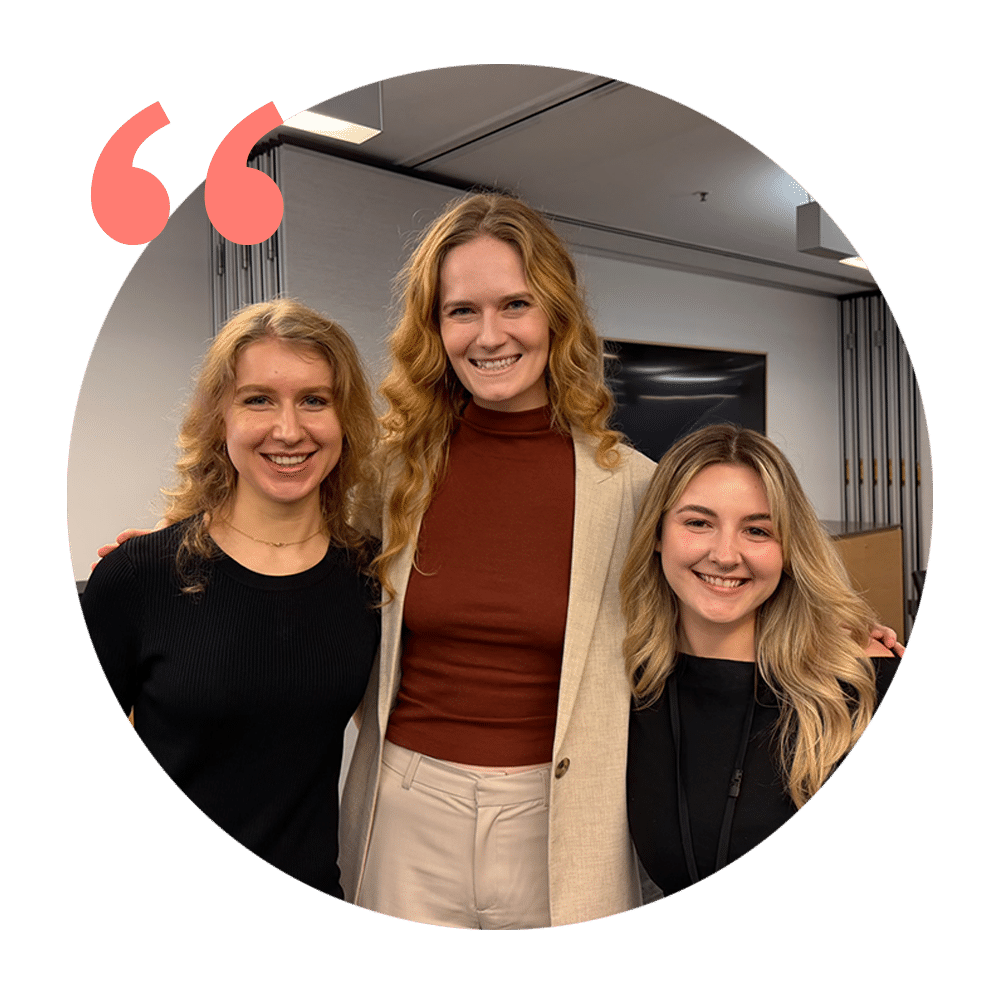
with Elena Piper, The Law Society of New South Wales

Mentorloop Impact Award Winner 2024 & 2026

The legal profession has a long-standing relationship with burnout, anxiety and high stress, and The Law Society of NSW knew that meaningful peer support was one of the best defences against it. But its mentoring program had a capacity problem: far more law students wanted a mentor than there were solicitors to go around. So in 2026 the team rebuilt it, with two dedicated streams, matching based on lived experience, rolling intake, and nine Group Loops for mentees waiting on a one-on-one match. Two years after Group Loops first appeared on their wish list, here’s how they turned that plan into a program that reaches solicitors and law students across New South Wales, including regional, rural and remote communities.

A profession under strain, and a program built to catch it

The Law Society of New South Wales is the co-regulatory authority for more than 43,000 solicitors across the state, and provides membership services to around 34,000 of them. It’s a profession, Elena Piper explains, with a long-standing relationship with burnout, anxiety, and high stress – and one of the strongest protective factors against that strain is effective, meaningful peer support.

The Law Society of NSW already ran a mentoring program, and it was high quality. But it had a structural problem: an imbalance between the number of law student mentees wanting guidance and the solicitor mentors available to give it. Capacity, not quality, was the constraint.

Redesigning for scale — and for real lives

In 2026, the growth and wellbeing team rebuilt the program from the ground up. They split it into two dedicated peer-to-peer streams — one for admitted solicitors, one for law students — so each group could be matched around what they actually needed. They expanded the matching criteria beyond practice area to include lived experience: chronic health conditions, late-stage career changes, family planning, carer responsibilities, and cultural, linguistic and religious diversity. They added training and resources for both mentors and mentees. And they moved to rolling intake, so no one has to wait for a fixed cohort date — solicitors and students can join any time between March and December, whenever mentorship becomes relevant to them.

The result is a program that now reaches members it couldn’t before, including solicitors in regional, rural and remote communities who’d historically had little access to this kind of professional peer support.

When the promise of “what’s next” became this year’s proof point

Back in 2024, when the Law Society first won Mentorloop’s Impact Award, Zarin Tasnim described Group Loops as a feature they were excited to grow into — a way to build specialised networking groups for members who might otherwise feel isolated in their field.

Two years on, that plan is a working part of the program. Facing an influx of mentees this year, the team used Group Loops to build nine separate groups, giving mentees who hadn’t yet been matched one-on-one a real, connected mentoring experience instead of a waitlist. It’s the clearest evidence yet that the program’s ambitions are becoming its results.

Knowing it’s working

For Elena, the signal that the redesign was landing wasn’t just the algorithm producing well-matched pairs — it was what came after the match. Mentors and mentees connecting across different locations, career stages, practice areas, and lived experiences. Feedback, kudos, and milestones being logged. Participants described their relationships as goal-oriented, focused, and full of insight and support.

“We have seen mentors and mentees connect across different locations, career stages, practice areas, and lived experiences, including people in regional, rural, and remote communities who may not have otherwise had access to this kind of professional peer support.”

What made it possible

Elena credits a lot of this to the direct, hands-on support of Mentorloop’s program advisor, Georgia, who worked with the team on every feature below — critical, Elena notes, given this was the first year the growth and wellbeing team had taken over running the program.

Specific things that made the rebuild possible:

What’s next

With a tailored matching algorithm now built around the specific needs of NSW solicitors, the team’s next focus is fixing the very imbalance that started this whole redesign: not enough mentors relative to mentee demand. Their plan is to go back to the profession and make the case directly — communicating the personal and professional benefits mentors themselves gain by giving back.

“The whole culture of guiding one another and sharing insights with one another and being able to connect and being able to help each other, is a great initiative that ultimately helps our organization and our profession as a whole.”

Elena’s advice to anyone starting a program today picks up the same thread: mentoring builds professional capability, but also community, connection, stronger reflection, and access to the kind of wisdom that only comes from balancing a real career with a real life.

Elena Piper

The Law Society of New South Wales

Share this Article

Join the loop

Get updates and learn from the best mentoring programs

“If this is something you’re considering facilitating for your organisation, our team would say go for it. You can’t go wrong if you’re looking at providing this kind of support.”

Elena Piper, The Law Society of New South Wales

You might also like:

What Role Does Equity and Equality Play in Your Mentoring Program?

The right mentoring program should level the playing field to empower entire cohorts of people: workplaces, member associations, social groups and educational institutions. Equality should be a cherished value so that every individual can thrive—whoever they are, whatever their background, however they worship or whomever they love. But we can’t arrive at equality without it’s often forgotten partner, equity.

What does a Mentoring Program Coordinator do?

Being a Mentoring Program Coordinator is an incredibly rewarding experience that positively impacts the lives of many. And while mentoring programs don’t fully run themselves (even though Mentorloop can do a great deal of the heavy lifting!), they do require a point of contact that can steer the program in the right direction for the organisation that is running one.

Building Quality Feedback Into Mentoring Relationships

This is Part 8 of our 10-part series on the 10 Key Qualities and Habits of a Highly Effective Mentor.

In this post, we’ll look at how mentors can successfully build quality feedback into their mentoring. Quality feedback is priceless because it clarifies expectations, helps people learn from their mistakes, and builds confidence. It also allows mentees to more effectively take what their mentors say and turn it into action.
Discover why
people leaders
choose Mentorloop

Mentorloop is trusted by over 100,000 people worldwide

Join other organisations unlocking the power of mentoring