
Two Mentoring Models, One Platform: A Generation of Students Who Don't Have to Figure It Out Alone.
with Shelley Blakey,
Academic Program Officer, University of Virginia Department of Kinesiology

with Shelley Blakey,
Academic Program Officer, University of Virginia Department of Kinesiology
At the University of Virginia’s School of Education and Human Development, a single mentoring program is doing something most institutions treat as two separate problems — helping first-years survive the overwhelm of a 400-person lecture hall, and helping upperclassmen find their way into the careers they’re chasing. Here’s how Mentorloop made it possible to run both, without adding staff or systems.
When UVA’s Department of Kinesiology launched peer and alumni mentoring at the same time, one person ran both. Here’s how Mentorloop made it manageable, and what it’s meant for the students on the other side.
You know the moment. A student walks into their first lecture — 400 strangers, a syllabus that assumes they already belong here, and no one who remembers what it felt like to be new. Somewhere on your campus, there’s probably an informal version of mentoring already happening: an older student who takes a first-year under their wing, an alum who still answers calls from students chasing their old career path. It works, in pockets. But it isn’t structured, isn’t visible to your leadership, and doesn’t scale past the handful of people doing it out of goodwill. If you’ve ever wondered whether a mentoring platform could actually hold together something that complex — multiple mentor types, multiple goals, one coordinator — this is the story to read.
When Shelley Blakey became Academic Program Officer for UVA Kinesiology in 2024, she quickly saw the limits of one-to-one advising. First-years were navigating big lecture halls and a demanding major, and “they needed more support than I alone could provide.”
Beall Roberts, a fourth-year kinesiology student and peer mentor, remembers what that transition feels like from the inside. For many students, it’s the first time they’ve been one face among hundreds.
At the same time, Shelley noticed a second gap among older students. Alex Atkins, now an emergency medicine PA, felt it himself as an undergraduate: there was no direct line to someone who had already walked the path he wanted to walk.
Her answer was to connect the two groups with the people who had already done it;
"I knew there had to be a better way to connect them with upperclass students who had already navigated many of the same challenges and were thriving in the major."
In 2025, Shelley launched Making KINEctions with two initiatives running side by side: a peer-to-peer program pairing first-years with upperclass mentors, and an alumni mentoring program linking students with professionals working in the field.
She researched several platforms before choosing one. Once she had the green light from the Kinesiology Department Chair and the Undergraduate Program Director, she moved ahead with Mentorloop, and as she puts it, “haven’t looked back.
"Launching two mentoring programs at once sounds daunting, but Mentorloop has made it incredibly manageable."
Matching that participants trust. “I’ve lost count of how many participants have told me how well matched they felt.”
Support that doesn’t wait for the end of the program. Shelley can check in with mentor-mentee pairs, share resources, and guide conversations and goals. Real-time insight into how relationships are developing means she can offer help while it matters, rather than waiting for a survey at the end.
Mentorloop Wednesdays. Every Wednesday she messages mentors and mentees with timely nudges: a reminder to check in ahead of an upcoming exam, or a prompt for alumni to encourage their mentees to attend a graduate school fair or clinical experience session. “These small touchpoints help keep everyone engaged and connected.”
Alumni, anywhere. Mentorloop has made it easy to engage alumni mentors both locally and across the country, which has opened doors for UVA students that would have been hard to open otherwise.
For the students and mentors in the program, the difference is something they can feel.
Since adopting Mentorloop, Beall Roberts — a 4th-year kinesiology student and peer mentor — has watched something click into place that used to be missing entirely:
"Mentorloop truly bridges the gap between students that might have never had classes together. The results are undeniable. Our mentorship events have had high attendance, community gatherings, and genuine connections between students and faculty."
Without it, she says, it would be “a mass of text messages, group chats, and email chains.”
Alex mentors from Texas, and says Mentorloop gives him “the perfect space for mentorship”, a convenient and secure place to schedule meetings and keep notes on everyone he mentors. What he sees in his mentees is confidence.
"A lot of the times when we first start meeting with them, they really don't know what they're getting into, and I think they have a fear of asking questions," he says. "What makes this program special is that as former students mentoring current students, it really opens up and creates a space that they feel comfortable asking a lot of questions they wouldn't otherwise ask a professor."
That’s the perfect outcome institutions are really looking for when working with Mentorloop; students who stop being afraid to ask for help.
Early in the year, one of Beall’s first-year mentees was feeling the pressure of the transition to college. “We slowed it down. We made a plan, and we worked together,” Beall remembers. By the end of the year, that mentee was “absolutely glowing with accomplishment.”
Alex watched a mentee take that same kind of momentum somewhere concrete: a job in a dermatology clinic, while still an undergraduate, with real clinical hours banked before PA school applications even began. “That’s the exact kind of head start generic advising can’t offer.”
This is what a mentoring program is actually for: the semester a student contemplates giving up, and doesn’t. The job a student gets because someone believed they were ready sooner than they believed it themselves.
Both mentors describe a program building on itself, not just repeating itself. Alex: “Over the next year or two, I see our program continuing to flourish with more students becoming aware of it, as well as the current students who are successfully applying to the graduate school of their choice, getting in.” Beall sees the next generation already forming: “Hopefully mentees will become mentors for future generations of kinesiology students, forming a long-lasting community of learners over the years.”
A mentoring program that regenerates its own mentors is a program that doesn’t need to be rebuilt every year — it’s the kind of structural payoff most institutions never get to.
"Being a former student and not in kind of the faculty role, students feel very equipped and open to asking us questions they otherwise wouldn't — and this really allows for the mentor-mentee relationship to grow."
And for Shelley, who runs it all:
"This experience has introduced me to students and alumni I may never have met through my day-to-day work. Seeing the relationships, confidence, and opportunities that have grown through mentoring has been incredibly rewarding. As the sole administrator supporting more than 100 participants, I can honestly say that the scale and impact of these programs would not have been possible without Mentorloop."
If your institution already has the informal version of this – mentors who care, students who need them, no system holding it together – Mentorloop is what turns that goodwill into something structured, visible, and built to outlast any one coordinator or cohort.
See how Mentorloop can support more than one kind of mentoring relationship on your campus:

Academic Program Officer, University of Virginia Department of Kinesiology
Share this Article
Join the loop
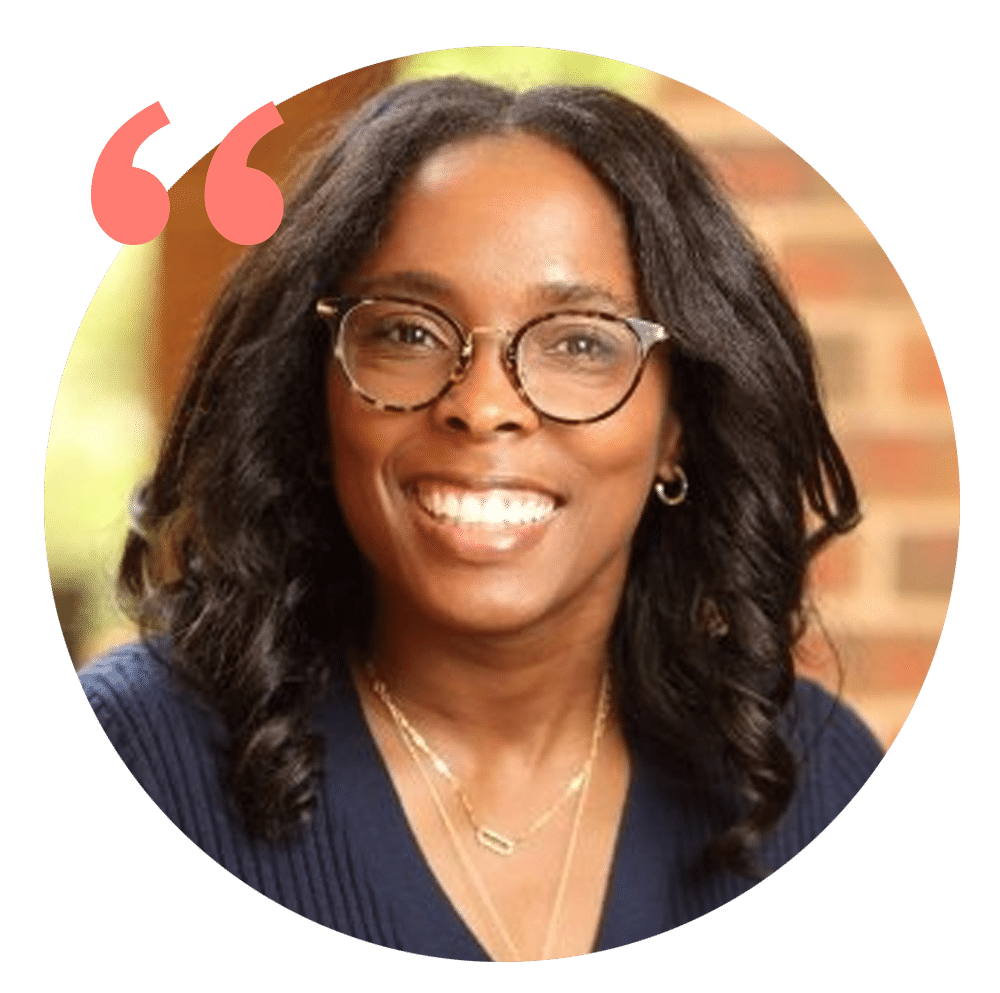
"Launching two mentoring programs at once sounds daunting, but Mentorloop has made it incredibly manageable. Matching mentors and mentees has been seamless, and I've lost count of how many participants have told me how well matched they felt."
– Shelley Blakey, Academic Program Officer, University of Virginia Department of Kinesiology

What Role Does Equity and Equality Play in Your Mentoring Program?
The right mentoring program should level the playing field to empower entire cohorts of people: workplaces, member associations, social groups and educational institutions. Equality should be a cherished value so that every individual can thrive—whoever they are, whatever their background, however they worship or whomever they love. But we can’t arrive at equality without it’s often forgotten partner, equity.

What does a Mentoring Program Coordinator do?
Being a Mentoring Program Coordinator is an incredibly rewarding experience that positively impacts the lives of many. And while mentoring programs don’t fully run themselves (even though Mentorloop can do a great deal of the heavy lifting!), they do require a point of contact that can steer the program in the right direction for the organisation that is running one.

Building Quality Feedback Into Mentoring Relationships
This is Part 8 of our 10-part series on the 10 Key Qualities and Habits of a Highly Effective Mentor.
In this post, we’ll look at how mentors can successfully build quality feedback into their mentoring. Quality feedback is priceless because it clarifies expectations, helps people learn from their mistakes, and builds confidence. It also allows mentees to more effectively take what their mentors say and turn it into action.